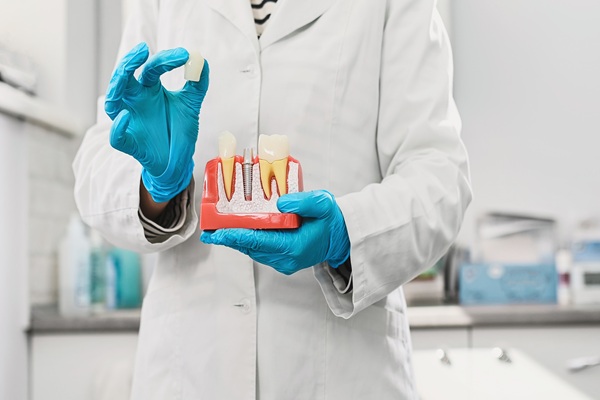
Both traditional crowns and implant crowns can restore the look and function of a smile, but they serve different purposes. A traditional crown protects and strengthens a natural tooth, while an implant crown replaces the visible portion of a missing tooth. A dentist helps patients understand these differences so they can see why they may need one option over the other.
What is the difference between a traditional crown and an implant crown?
The main distinction between a traditional and an implant dental crown lies in the structure that supports the final result. A traditional crown fits over a natural tooth with a healthy, stable root system. It provides a protective layer for a tooth with significant decay or structural cracks. Thus, with a traditional crown, the dentist preserves the existing tooth while enhancing its overall strength and appearance.
On the other hand, an implant crown serves a different purpose: replacing a missing tooth. Instead of resting on a natural tooth, it attaches to a titanium post called a dental implant, which sits securely within the jawbone. This post acts as a replacement for the missing tooth root and provides a sturdy base for the implant crown. In this way, the dental implant process essentially recreates the entire tooth structure from the bone up to the visible chewing surface.
When a traditional dental crown is an option
A traditional dental crown remains a popular choice when a natural tooth is still healthy enough to support it. This option allows the dentist to save the original tooth after it has been cracked, decayed, or otherwise damaged beyond the scope of a dental filling. A traditional crown simply caps the tooth, reinforcing it so that it can handle the pressure of daily biting and chewing again.
The timeline for a traditional crown is typically two appointments. The dentist prepares the natural tooth and takes digital impressions, which a dental lab uses to create the crown. The patient can expect a temporary crown until the final restoration is ready in about 1 to 2 weeks. The final crown blends with the surrounding teeth for a natural and cohesive look that feels comfortable.
When an implant crown is needed
An implant crown is the necessary choice when a tooth is missing or must be extracted. Because no natural tooth structure remains, the dental implant is what anchors the crown in the mouth. Like a traditional crown, an implant crown is designed to blend with the rest of the smile.
While there are other ways to replace a tooth, such as a dental bridge, implant crowns offer several unique benefits. First, since they are anchored to implants that sit directly in the jawbone, they help keep the bone stimulated. This keeps it strong, which helps maintain the natural shape of the face. Implant crowns are also a permanent, fixed alternative to removable dental appliances, such as partial dentures, that can slip or click.
Next, this tooth replacement functions independently of the neighboring teeth, which helps preserve their long-term health. Traditional bridges often require the dentist to reshape nearby healthy teeth, but an implant crown leaves those teeth untouched. This makes the replacement tooth feel stable and secure during daily conversations and meals. Many patients appreciate the durability and the natural feel that implant crowns provide.
Caring for dental crowns
Both traditional and implant crowns require consistent oral hygiene to maintain. This includes careful brushing and flossing at home, as well as professional dental cleanings every 6 months. This is because while neither crown can decay, the natural structures around them can. For an implant crown, this mainly refers to the gum tissue surrounding it; for a traditional crown, it refers to both the gums around it and the natural tooth structure beneath it.
Proper care helps prevent gum disease and recurrent decay (if applicable) to keep the crown strong and functional for as long as possible. Most patients can expect to get 10 to 15 years of use out of their tooth-colored crowns, traditional or implant, before they need to be replaced.
We are here to support your smile
Knowing the difference between an implant crown and a traditional crown is an important step in the journey toward a healthier smile. Both options can effectively restore bite strength and function, as well as the appearance of the smile. However, one restores teeth, and the other helps replace them. To learn more, reach out to our team at Founders Dental. We can help you review all your options for restoring or replacing teeth during an appointment.
Request an appointment here: https://www.foundersdental.com or call Founders Dental at (720) 893-7362 for an appointment in our Castle Rock office.
Check out what others are saying about our dental services on Yelp: Implant Crowns in Castle Rock, CO.
Recent Posts
If you want to know if your dentures will feel normal, the answer is yes. You may have recently gotten the teeth, or perhaps you are considering getting them.You might want to know what to expect. The good news is that today’s prosthetics feel more natural than ever, and you can get accustomed to them…
Millions of people wear dentures that help them to eat and speak properly. But getting used to wearing dentures can take a while as your mouth adjusts.Therefore, to make your denture experience as positive as possible, you should know what to expect when getting dentures. Read on to learn more about dentures and how they…
People choose dentures to replace teeth for many reasons. If you have lost teeth or if the dentist has extracted some of yours, there are effective solutions to fill in the gaps in your mouth.You should not have to live with the embarrassment or difficulties of not having teeth. While there are various options to…
A root canal can save a severely damaged tooth. However, a sizable portion of the tooth will likely be gone afterward. The good news is that a restorative dentist can rebuild the treated tooth with a dental crown. While not always a requirement after root canal therapy, these restorations are often the final step in…